
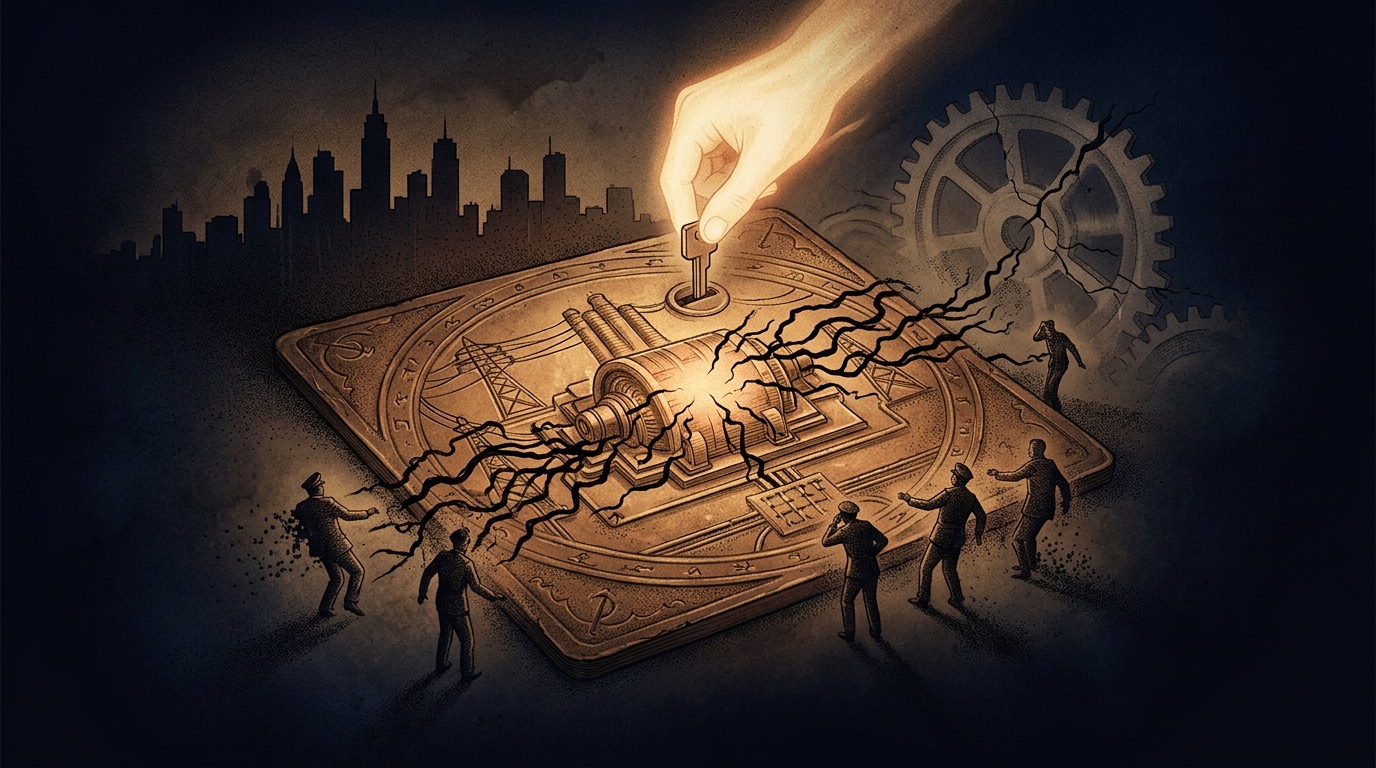
 Codex Illustration
Digital Sabotage
In the shadowed corridors between espionage and warfare, nation-states have discovered that lines of code can achieve what armies once required — disabling centrifuges, darkening power grids, and reshaping geopolitical reality without a single shot fired.
Overview
Digital sabotage — the deliberate use of malicious software, network intrusions, or coordinated electronic attacks to disable, degrade, or destroy an adversary's infrastructure or information systems — has quietly emerged as one of the defining instruments of statecraft in the twenty-first century. Unlike conventional warfare, its operations are frequently deniable, its victims sometimes uncertain of the perpetrator, and its legal frameworks genuinely unresolved under international law. The documented historical record, drawn from declassified intelligence disclosures, investigative journalism, and academic cybersecurity analysis, confirms that multiple governments have developed and deployed offensive digital capabilities as instruments of national policy. What was once confined to science fiction has become a well-attested dimension of modern geopolitical competition.
The most thoroughly documented early instance of state-sponsored digital sabotage is the Stuxnet operation, revealed publicly in 2010. Stuxnet was a sophisticated worm, widely attributed to a joint United States–Israeli intelligence effort, that physically damaged uranium enrichment centrifuges at Iran's Natanz nuclear facility by manipulating industrial control systems while feeding false status data to operators — a deception of remarkable technical elegance. Investigative journalist Kim Zetter's account in Countdown to Zero Day (2014) remains the authoritative civilian reconstruction of this operation, drawing on extensive source reporting and technical analysis. Stuxnet was significant not merely for its technical sophistication but because it marked the first publicly confirmed use of a cyberweapon to cause physical destruction of critical infrastructure belonging to a foreign state.
The operational landscape broadened considerably in the years following Stuxnet's exposure. The 2014 destructive attack on Sony Pictures, attributed by U.S. government investigators to North Korean state actors, demonstrated that digital sabotage could be deployed as an instrument of coercion and retaliation in the cultural and commercial sphere. Russia's documented interference in Ukrainian power infrastructure — attacks on the country's electrical grid in 2015 and 2016, attributed by multiple cybersecurity firms including ESET and Dragos to the threat actor known as Sandworm — represented the first confirmed instances of cyberattacks successfully blacking out civilian power networks. These events moved the phenomenon firmly from theoretical concern to documented operational reality, acknowledged by governments, analyzed by academics, and investigated by international bodies.
The broader strategic implications of digital sabotage remain actively contested by scholars of international relations, military ethicists, and legal theorists. Central questions include the threshold at which a cyberattack constitutes an act of war under international law, the legitimacy of offensive cyber operations conducted below that threshold, and the profound asymmetry between the ease of launching such operations and the difficulty of attributing them with legal certainty. The Tallinn Manual, a scholarly project convened by NATO's Cooperative Cyber Defence Centre of Excellence and authored by a team of international legal experts, represents the most serious academic attempt to apply existing laws of armed conflict to cyberspace — though its conclusions carry no binding legal authority. What is not disputed is that digital sabotage has fundamentally altered the calculus of covert action, placing extraordinary destructive potential in the hands of actors ranging from superpower intelligence agencies to small but technically capable state and non-state groups.
Key Claims
Timeline
Evidence
Multiple Perspectives
Biblical Lens
Scripture Threads
Sources & Further Study
Questions to Explore
Go Deeper Path
Follow the Thread
Continue the Investigation
You’ve reached the Full Archive portion of this Case File.
Ask the Archivist
about this fileSign in to ask the Archivist
Create a free account to ask the Archivist 1 grounded question each day, cited straight from the CODEX case files.
Discussion
0Share findings, questions, and evidence with fellow Seekers. Be respectful and cite sources where you can.
No comments yet. Be the first to open this thread.