
 Codex Illustration
Past-Life Memory Cases
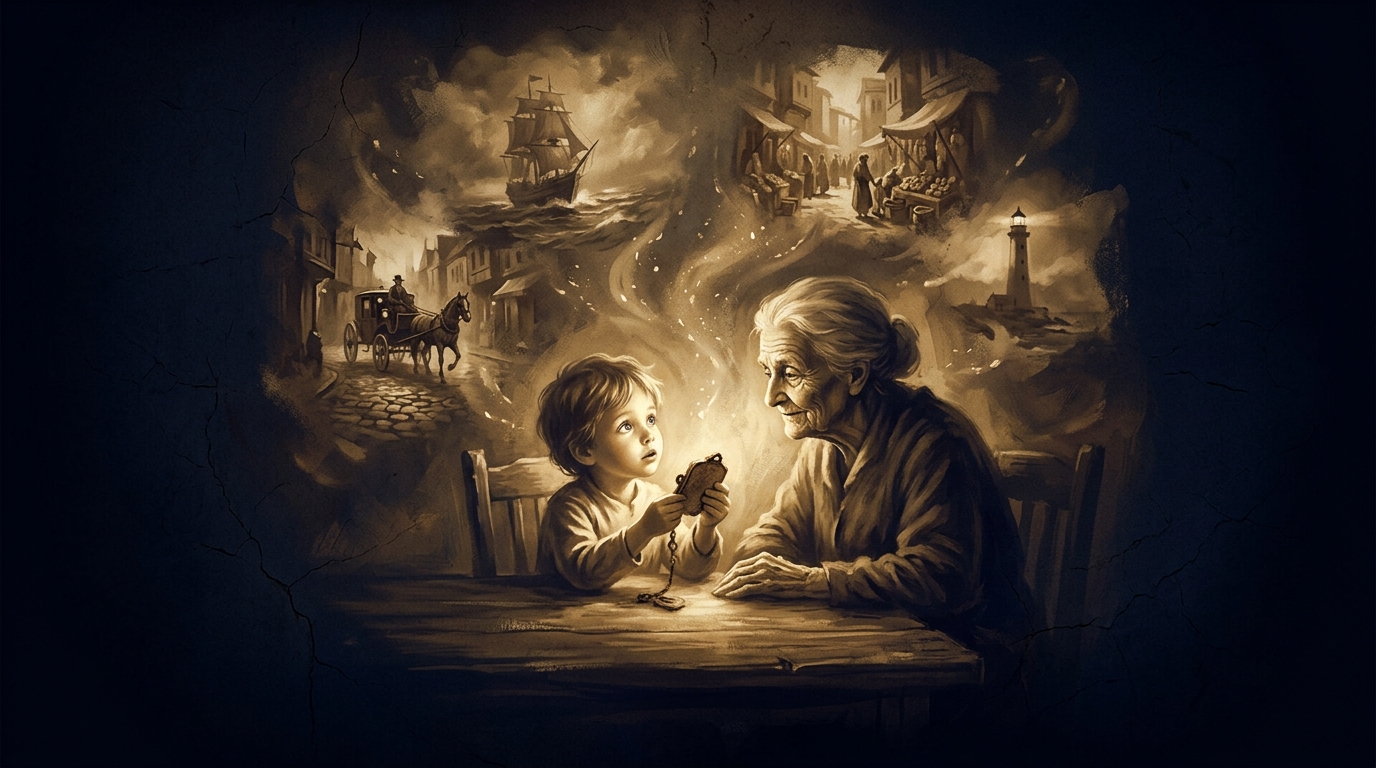
Across cultures and centuries, a small but persistent number of individuals — most often young children — have reported detailed, verifiable memories of lives they claim to have lived before their birth, prompting serious academic investigation and profound philosophical questions about the nature of consciousness, identity, and death.
Overview
The phenomenon of past-life memory reports occupies an unusual position in the modern academy: it is simultaneously dismissed by mainstream neuroscience, taken seriously by a small but credentialed cadre of researchers, and embraced with varying degrees of literalism across Hindu, Buddhist, Druze, and certain indigenous traditions. The most rigorous scientific investigation of such cases was undertaken by Dr. Ian Stevenson of the University of Virginia, who over roughly forty years collected and personally investigated more than three thousand cases from around the world. Stevenson's methodology was notable for its systematic character: he sought independent corroboration of claimed memories before interviewees could have plausibly acquired the information through ordinary means, and he documented cases in which children exhibited birthmarks or congenital defects corresponding to wounds described on the remembered previous individual. His work, published in peer-reviewed form by the University Press of Virginia and reviewed in journals such as the Journal of the American Medical Association, represents the primary evidentiary foundation of the field. It is important to note, however, that even Stevenson himself was careful to frame his findings as data requiring explanation, not proof of reincarnation per se.
The cases that have attracted the most scholarly attention share a constellation of features: onset typically between ages two and five, spontaneous and often emotionally distressed narration, highly specific details regarding names, locations, occupations, and family members of a purported previous life, and — in the strongest cases — successful independent verification of those details. Children in some cases correctly identify photographs of the person they claim to have been, describe the manner of a violent death in ways consistent with autopsy records, and recognize former family members upon first meeting. Dr. Jim Tucker, Stevenson's successor at the University of Virginia Division of Perceptual Studies, has continued this research and assigned cases a 'strength of evidence' score; cases involving Western children have been documented by Tucker in his books Life Before Life (2005) and Return to Life (2013). The rarity of strong Western cases — relative to cases from cultures with explicit reincarnation traditions — is itself a subject of ongoing methodological debate.
Skeptics have raised substantial objections. The primary alternative explanations proposed include cryptomnesia (forgotten ordinary exposure to the relevant information), confirmation bias in case investigation, social pressure on children within cultures that expect reincarnation narratives, fraud or exaggeration by families, and what critics describe as insufficient rigor in excluding normal sources of information. Some researchers, including philosopher Stephen Braude and parapsychologist Alan Gauld, have argued that even granting the anomalous character of the strongest cases, alternative paranormal hypotheses — such as possession, mediumistic contact, or some form of unconscious telepathic acquisition — cannot be ruled out without invoking reincarnation specifically. The data, on any reading, remains genuinely contested rather than conclusively resolved.
Within comparative religion, the phenomenon sits at the intersection of some of humanity's oldest concerns. Platonic philosophy proposed in the Phaedo and Meno that the soul carries knowledge from prior existence; Pythagorean traditions taught metempsychosis; and the Cathars in medieval Europe held reincarnation doctrines that brought them into fatal conflict with the Church. In the modern West, the phenomenon has attracted not only academic attention but popular fascination, producing a substantial literature of regression therapy accounts — a category methodologically far weaker than spontaneous childhood cases, due to the well-documented suggestibility effects of hypnosis documented by researchers such as Nicholas Spanos. The distinction between spontaneous childhood reports and hypnotic regression is critical and is frequently collapsed in popular treatments of the subject.
Key Claims
Timeline
Evidence
Multiple Perspectives
Biblical Lens
Scripture Threads
Sources & Further Study
Questions to Explore
Go Deeper Path
Follow the Thread
Continue the Investigation
You’ve reached the Full Archive portion of this Case File.
Ask the Archivist
about this fileSign in to ask the Archivist
Create a free account to ask the Archivist 1 grounded question each day, cited straight from the CODEX case files.
Discussion
0Share findings, questions, and evidence with fellow Seekers. Be respectful and cite sources where you can.
No comments yet. Be the first to open this thread.