
 Codex Illustration
Shadow People
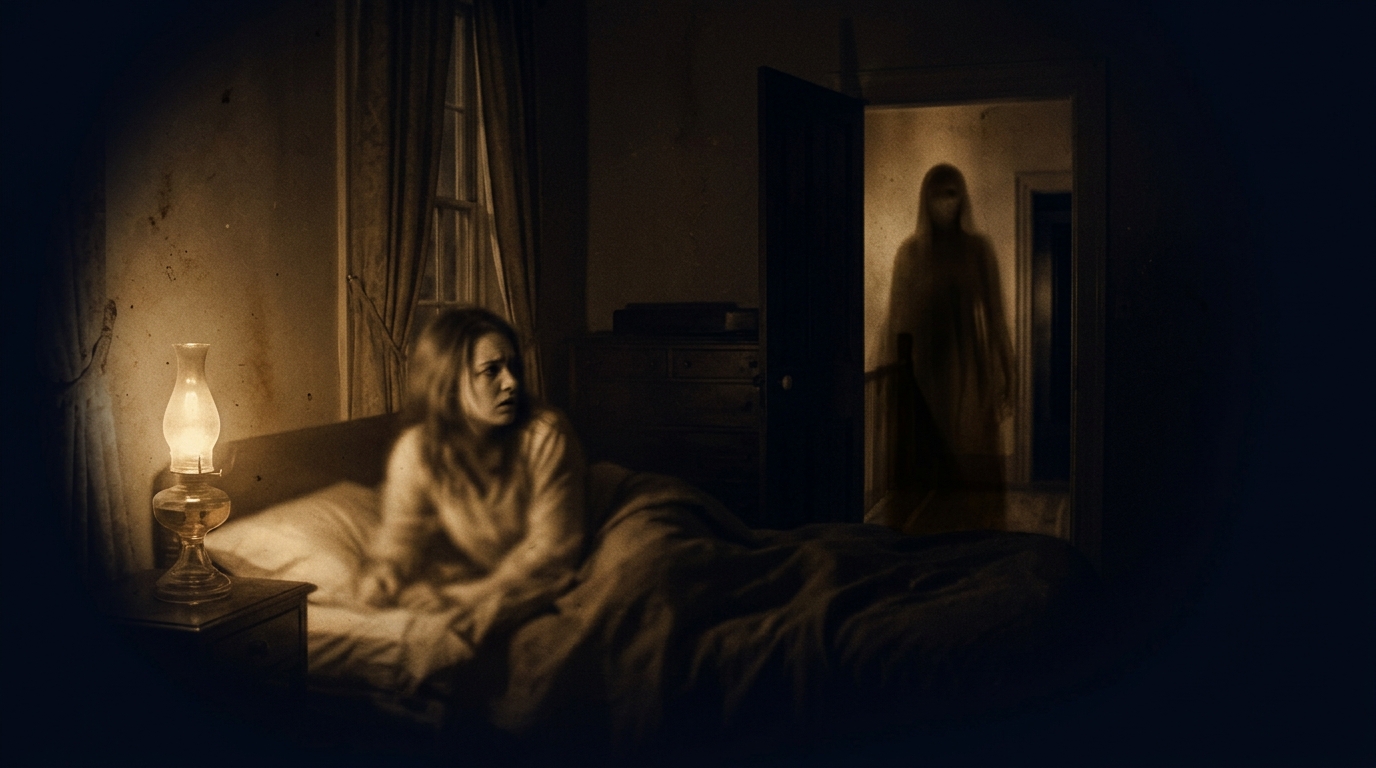
Shadow people are reported apparitions described as dark, humanoid silhouettes perceived at the edge of vision or during hypnagogic and hypnopompic states — figures that vanish when looked at directly, yet leave witnesses with a profound and often terror-laden sense of presence. Whether they represent neurological artifacts, folklore projections, psychological phenomena, or something not yet categorized, they constitute one of the most widely and consistently reported anomalous experiences across cultures and centuries.
Overview
Reports of shadowy humanoid figures haunting the periphery of human perception are remarkably consistent across geography and era. Witnesses typically describe a featureless, deeply dark silhouette — darker than the surrounding darkness — that moves with apparent intelligence, often observed beside a bed, in a doorway, or at the edge of a room before dissolving when directly confronted. Unlike conventional ghost reports, shadow people accounts rarely involve recognizable features, voices, or identifiable personalities; they are defined primarily by absence — of color, detail, and resolution. This phenomenological consistency, shared by people with no prior exposure to the concept, is frequently cited by researchers as one of the more intriguing aspects of the phenomenon, though it equally invites explanations rooted in the universal architecture of human sleep and perception.
Modern popular awareness of the shadow people concept crystallized in large part through early-2000s internet forums and the radio programs of Art Bell and subsequent Coast to Coast AM hosts, who solicited and broadcast firsthand listener accounts. The volume and similarity of these independent reports drew the attention of researchers working at the intersection of sleep science, folklore, and anomalistic psychology. Within this broader category, one figure has emerged as a particularly specific and disturbing variant: the Hat Man — a tall shadow entity distinguished by a wide-brimmed fedora or top hat, and sometimes a long coat. Unlike generic shadow figures, the Hat Man appears in accounts with unusual specificity and geographic spread, and is frequently associated with states of sleep paralysis and a crushing sense of malevolent intent. Researcher Heidi Hollis, whose popular books helped codify the Hat Man as a distinct sub-phenomenon, has collected thousands of reports from correspondents worldwide.
Sleep science offers the most substantively supported framework for understanding shadow people. During sleep paralysis — a documented neurological state in which the body's atonia mechanisms persist briefly into waking consciousness — an estimated 20–40% of those affected report visual and auditory hallucinations. These hallucinations cluster into recognizable types across cultures: a sensed presence, a figure seated on the chest, and shadowy humanoid forms in the peripheral field. The neuroscientific literature, including work by researchers such as Baland Jalal and J. Allan Cheyne, documents these 'intruder' hallucinations with notable specificity, suggesting that certain shadow figure experiences are consistent with predictable features of the hypnagogic and hypnopompic states. This does not, of course, preclude the possibility that some reported encounters occur outside these altered states entirely — a distinction that more careful phenomenological research would need to address.
Beyond sleep science, shadow people occupy a complex space in the folklore and anomalistic literature. Cultural anthropologists note that analogous figures appear in diverse traditions: the Islamic jinn, the Germanic Schwarze Mann, indigenous North American spirit traditions, and various Old World 'night hag' accounts all contain elements structurally similar to modern shadow people reports. Whether this convergence reflects a shared underlying experience — neurological, psychological, or otherwise — or points to a more ontologically robust phenomenon remains genuinely open. What can be said with some confidence is that shadow people reports constitute a persistent, cross-cultural, phenomenologically coherent strand of human anomalous experience that resists both easy dismissal and easy explanation.
Key Claims
Timeline
Evidence
Multiple Perspectives
Biblical Lens
Scripture Threads
Sources & Further Study
Questions to Explore
Go Deeper Path
Follow the Thread
Continue the Investigation
You’ve reached the Full Archive portion of this Case File.
Ask the Archivist
about this fileSign in to ask the Archivist
Create a free account to ask the Archivist 1 grounded question each day, cited straight from the CODEX case files.
Discussion
0Share findings, questions, and evidence with fellow Seekers. Be respectful and cite sources where you can.
No comments yet. Be the first to open this thread.