
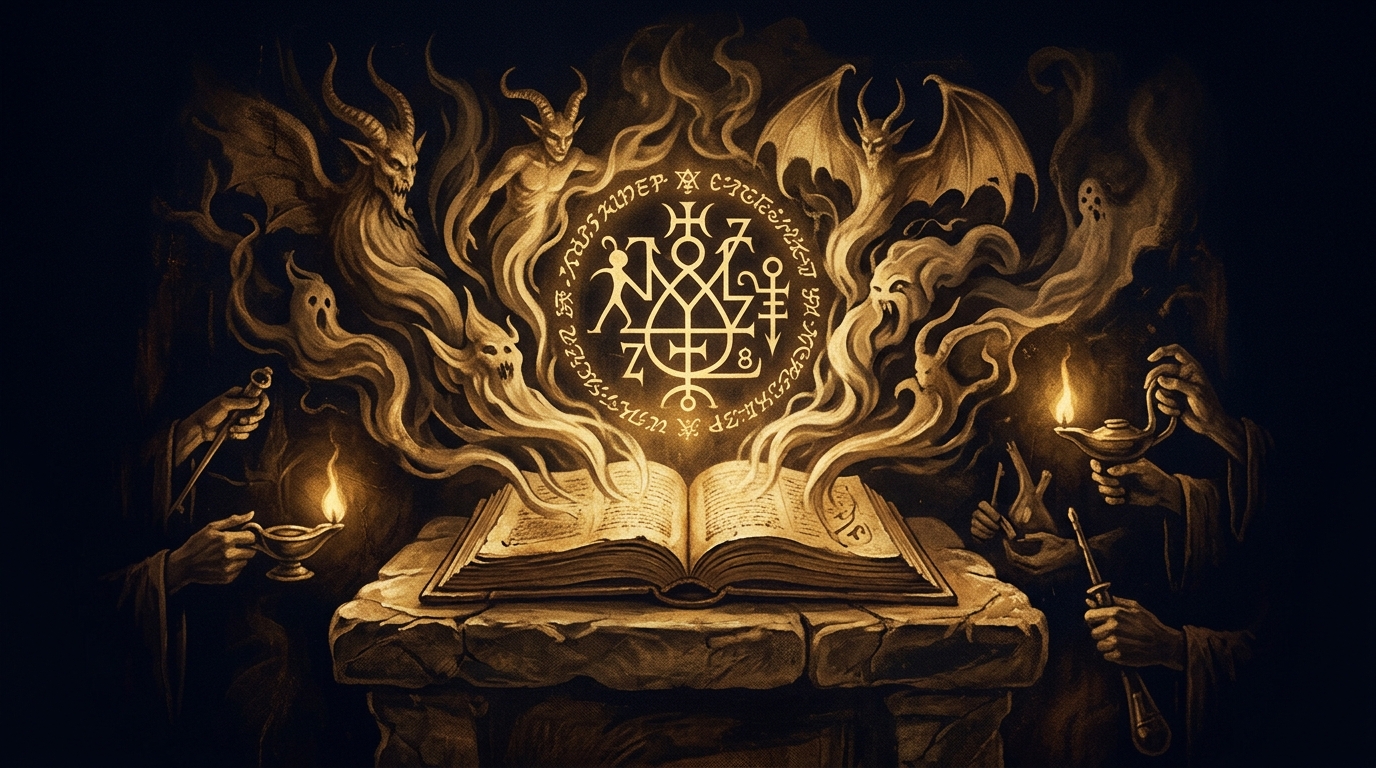
 Codex Illustration
Demonology
Demonology is the systematic study of malevolent spiritual beings across religious, theological, and cultural traditions—an ancient preoccupation that spans Mesopotamian incantation texts, Second Temple Jewish angelology, Christian patristic theology, and modern scholarly inquiry into the unseen realm.
Overview
The study of demons is among the oldest organized bodies of religious knowledge in human civilization. Mesopotamian sources from Sumer and Babylon catalogued legions of malevolent spirits—lilitu, gallu, utukku—believed to cause disease, madness, and misfortune, and priestly exorcists known as ashipu developed elaborate rituals to combat them. These traditions fed into the broader ancient Near Eastern conceptual world that Israelite religion inherited and selectively transformed, producing a distinctly Hebrew theology of hostile spiritual beings subordinate to, yet in rebellion against, the sovereign God of Israel.
Within the Hebrew Bible, demonic language is restrained compared to neighboring cultures, yet present: the shedim (Deuteronomy 32:17; Psalm 106:37) receive illicit sacrifices, the azazel-goat ritual in Leviticus 16 carries symbolically loaded overtones, and the figure of the adversary (ha-satan) appears in Job and Zechariah as a prosecutorial member of the divine council. The Second Temple period, particularly texts like 1 Enoch and the Book of Jubilees, witnessed an explosion of demonological speculation, linking the proliferation of evil spirits to the fallen Watchers of Genesis 6 and their giant offspring, the Nephilim. This framework profoundly shaped early Christianity and the New Testament's portrayal of demonic activity.
The New Testament presents Jesus as engaged in direct conflict with demonic beings—exorcisms are among the most well-attested elements across all four Gospels and represent a central feature of his ministry. The Church Fathers systematized these traditions: Origen, Tertullian, and Justin Martyr all wrote on demonic nature and activity, frequently drawing on the Watcher tradition and identifying the gods of the nations as fallen divine beings. Medieval scholasticism, epitomized by Thomas Aquinas and the later Malleus Maleficarum (1486), produced hierarchical classifications of demonic beings that deeply influenced Western popular imagination, though modern biblical scholarship has largely moved away from these medieval taxonomies.
Contemporary scholarship, especially scholars like Michael Heiser, has reoriented demonological discussion back toward its ancient Near Eastern and Second Temple Jewish roots, arguing that the New Testament authors operated within a coherent cosmic geography in which rebellious divine beings held delegated authority over the nations (Deuteronomy 32:8–9), and that the church's mission is framed against this backdrop of cosmic reclamation. The phenomenology of demonic encounter also attracts attention from anthropologists, psychologists, and cross-cultural researchers, who note the striking consistency of possession-type experiences across unrelated cultural traditions—a consistency that resists purely psychological reduction, though naturalistic explanations remain the default within academic medicine.
Timeline
Evidence
Multiple Perspectives
Biblical Lens
Scripture Threads
Sources & Further Study
Questions to Explore
Follow the Thread
Continue the Investigation
You’ve reached the Full Archive portion of this Case File.
Ask the Archivist
about this fileSign in to ask the Archivist
Create a free account to ask the Archivist 1 grounded question each day, cited straight from the CODEX case files.
Discussion
0Share findings, questions, and evidence with fellow Seekers. Be respectful and cite sources where you can.
No comments yet. Be the first to open this thread.