
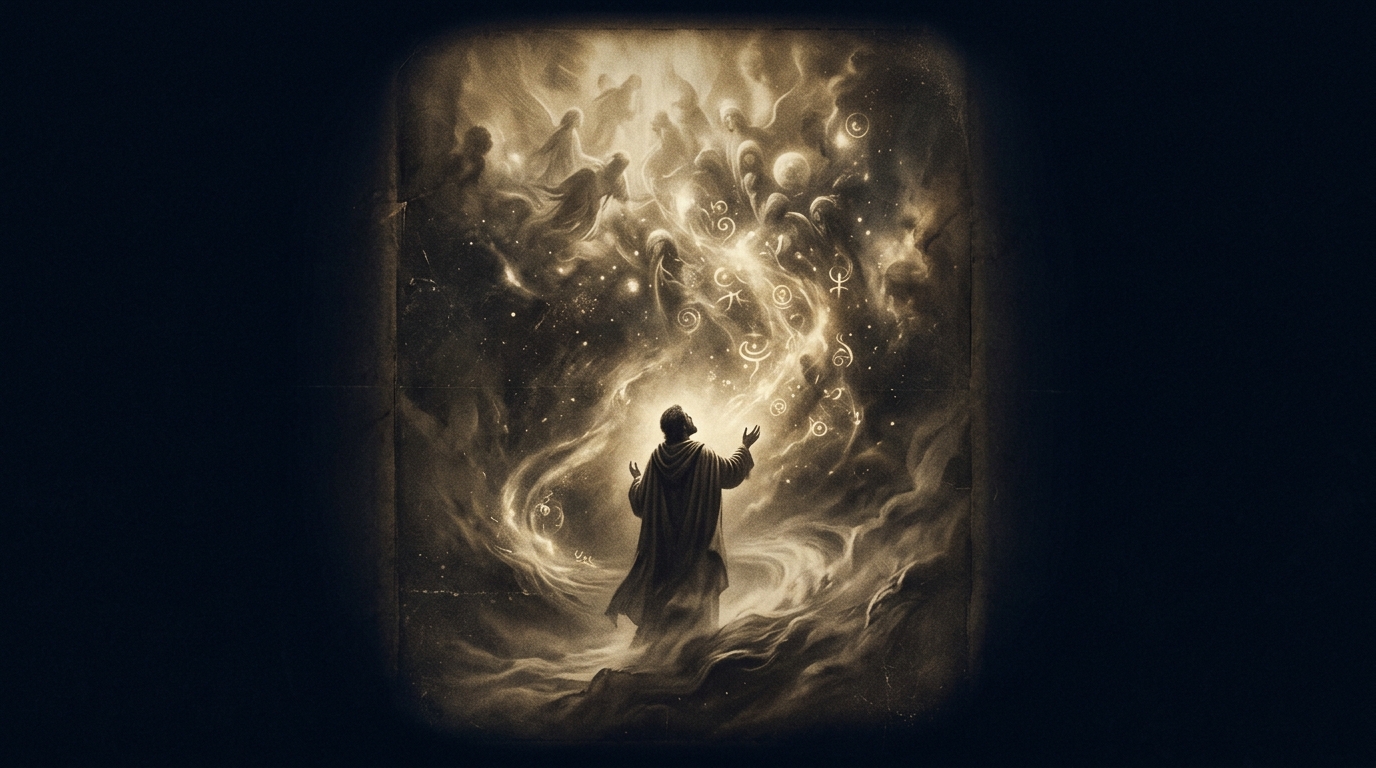
 Codex Illustration
Dreams and Visions
Across every culture and epoch, dreams and visions have been regarded as privileged thresholds between the human and the divine—channels through which gods, angels, ancestors, and cosmic forces communicate with mortals. From the prophetic dreams of Joseph in Egypt to the neurological laboratories of modern sleep science, the question of what dreams truly are remains one of the most contested and consequential in human history.
Overview
Dreams occupy a singular position in the religious, philosophical, and scientific history of humanity. In the ancient Near East, dreams were not merely psychological phenomena but were understood as formal modes of divine communication—a conviction shared by Mesopotamian, Egyptian, Canaanite, Greek, and Israelite cultures alike. Specialized dream interpreters, incubation temples, and elaborate omen texts attest to the institutional seriousness with which antiquity approached the sleeping mind. Mesopotamian sources such as the dream books of Assyria (e.g., the Assyrian Dream Book, compiled c. 7th century BC) and Egyptian texts like the Chester Beatty Papyrus demonstrate sophisticated typologies of dream experience, classifying them by content, divine origin, and prophetic significance.
The Hebrew Bible presents dreams and visions as among God's primary modes of revelation, most explicitly in Numbers 12:6, where Yahweh declares that He speaks to prophets in visions and dreams. Major biblical figures—Abraham, Jacob, Joseph, Daniel, and the prophets—receive divine communication through nocturnal experience. The New Testament continues this pattern: Joseph of Nazareth receives angelic guidance through dreams, and the book of Acts records the fulfillment of Joel's prophecy that visions and dreams would mark the outpouring of the Spirit. The apocalyptic literature of both testaments is saturated with visionary experience, blurring the line between dreaming, prophetic trance, and heavenly ascent.
In the patristic and medieval periods, Christian theologians grappled seriously with the theological classification of dreams. Figures such as Tertullian, Jerome, and Gregory the Great distinguished among dreams of divine origin, those sent by demons, and those arising from bodily conditions—a tripartite schema with deep roots in Greco-Roman philosophical tradition, particularly in Macrobius's Commentarii in Somnium Scipionis (c. AD 400). Islamic tradition similarly enshrined the concept of the ru'ya sadiqah (true dream), and Sufi mystics developed elaborate theologies of the imaginal realm as a genuine ontological domain. Meanwhile, Jewish tradition, particularly in Kabbalah, treated dream states as genuine encounters with higher spiritual realities accessible through the soul's partial departure from the body during sleep.
Modern neuroscience has mapped the neurological correlates of dreaming—REM sleep, hippocampal memory consolidation, default mode network activation—without resolving the deeper philosophical question of whether subjective dream experience is reducible to neural firing patterns. Researchers such as Hobson and McCarley's activation-synthesis hypothesis (1977) proposed that dreams are essentially noise interpreted by a meaning-seeking brain, while others, including researchers in the field of lucid dreaming (Stephen LaBerge, Stanford) and cross-cultural psychology (Kelly Bulkeley), argue that dreams carry genuine psychological, symbolic, and potentially transpersonal significance. The intersection of dreams with near-death experiences, psychedelic states, shamanic practice, and remote viewing programs further complicates any purely materialist account.
Timeline
Evidence
Multiple Perspectives
Biblical Lens
Scripture Threads
Sources & Further Study
Questions to Explore
Follow the Thread
Continue the Investigation
You’ve reached the Full Archive portion of this Case File.
Ask the Archivist
about this fileSign in to ask the Archivist
Create a free account to ask the Archivist 1 grounded question each day, cited straight from the CODEX case files.
Discussion
0Share findings, questions, and evidence with fellow Seekers. Be respectful and cite sources where you can.
No comments yet. Be the first to open this thread.