
 Codex Illustration
Megaliths
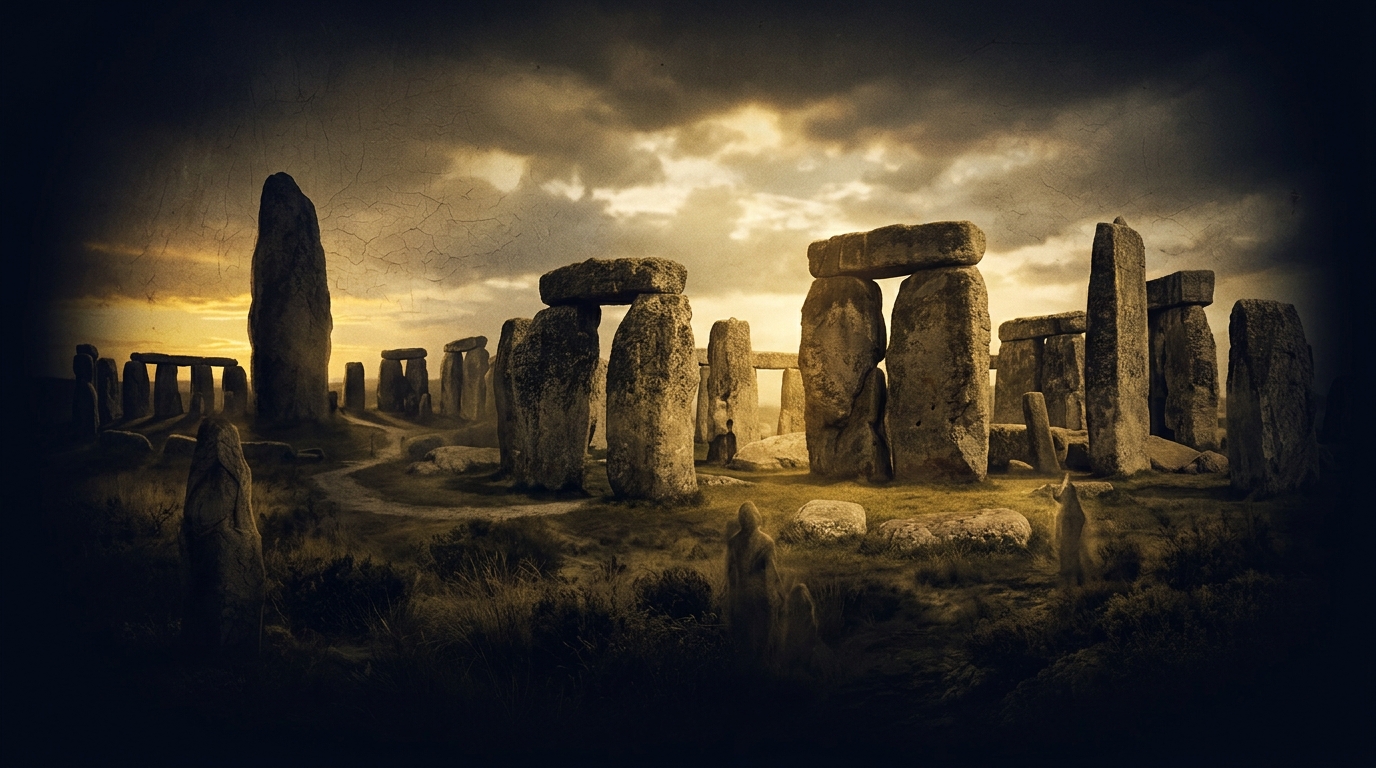
Megaliths — massive stone structures erected across the ancient world from Ireland to India, from Malta to Mesoamerica — represent one of archaeology's most enduring puzzles, raising profound questions about prehistoric human capability, shared cultural memory, and the organizational complexity of pre-literate societies.
Overview
The term 'megalith' derives from the Greek megas (great) and lithos (stone), and encompasses a broad class of prehistoric stone monuments: dolmens, menhirs, cromlechs, passage graves, stone circles, and cyclopean walls constructed from individual stones sometimes weighing hundreds of tonnes. The megalithic tradition spans an extraordinarily wide chronological and geographical range — from the world's oldest known monumental complex at Göbekli Tepe in southeastern Turkey (c. 9600–8200 BC) to the Carnac alignments in Brittany (c. 4500–2500 BC), Stonehenge on Salisbury Plain (c. 3000–1500 BC), the megalithic temples of Malta (c. 3600–2500 BC), and the moai of Easter Island (c. AD 1100–1680). This global distribution has generated persistent scholarly debate about whether the phenomenon reflects independent invention, diffusion of ideas along ancient maritime routes, or something more fundamental about human cognition and cosmological orientation.
Mainstream archaeology explains megalithic construction through the lens of Neolithic and Bronze Age social organization, arguing that sufficiently large, coordinated labor pools — mobilized by chieftains, ritual specialists, or corporate kinship groups — could move and erect enormous stones using timber sledges, rollers, earthen ramps, and rope systems. Experimental archaeology has repeatedly demonstrated the mechanical plausibility of these methods; the Stonehenge Riverside Project and related studies by researchers such as Mike Parker Pearson have substantially advanced understanding of why and how such monuments were built, linking many to ancestor veneration, seasonal calendrical cycles, and communal feasting. The evidence for astronomical alignment at sites like Newgrange (Co. Meath, Ireland), where the winter solstice sunrise illuminates the inner chamber with laser precision, is documented and widely accepted.
Nevertheless, unresolved questions persist. The logistical challenges of quarrying, transporting, and erecting multi-tonne stones across dozens of miles — Stonehenge's bluestones originate from the Preseli Hills in Wales, some 250 km distant — strain simple explanations and invite ongoing investigation. More puzzling is the cross-cultural convergence of megalithic forms: trilithon gateways, circular enclosures, and chambered tombs appear in geographically isolated cultures with no demonstrable contact. Scholars in archaeoastronomy such as Alexander Thom proposed that prehistoric builders possessed sophisticated geometric and astronomical knowledge, a claim that remains contested but is not dismissed outright by mainstream researchers. The relationship between megalithic sites and the sacred — as axes mundi, liminal thresholds between the living and the dead, or theaters for cosmic ritual — is broadly recognized across anthropological literature.
Popular culture has layered a dense mythology atop these sites, ranging from Arthurian legend and Druidic association (both largely post-medieval fabrications with respect to Stonehenge) to ancient astronaut theories positing extraterrestrial engineering. Serious scholarship neither requires nor endorses such explanations; the documented evidence of Neolithic ingenuity is remarkable on its own terms. From a theological and comparative-religious perspective, megaliths raise compelling questions about the universal human impulse to mark sacred space, communicate with the divine through monumental construction, and inscribe cosmological order onto the landscape — questions that intersect, for biblically oriented scholars, with ancient Near Eastern temple cosmology and the idea that human beings are hardwired as image-bearers to construct sacred precincts.
Timeline
Evidence
Multiple Perspectives
Biblical Lens
Scripture Threads
Sources & Further Study
Questions to Explore
Follow the Thread
Continue the Investigation
You’ve reached the Full Archive portion of this Case File.
Ask the Archivist
about this fileSign in to ask the Archivist
Create a free account to ask the Archivist 1 grounded question each day, cited straight from the CODEX case files.
Discussion
0Share findings, questions, and evidence with fellow Seekers. Be respectful and cite sources where you can.
No comments yet. Be the first to open this thread.